
HOUSTON COUGARS CRUSH COLORADO BUFFALOES 102–62 IN DOMINANT SHOW OF POWER
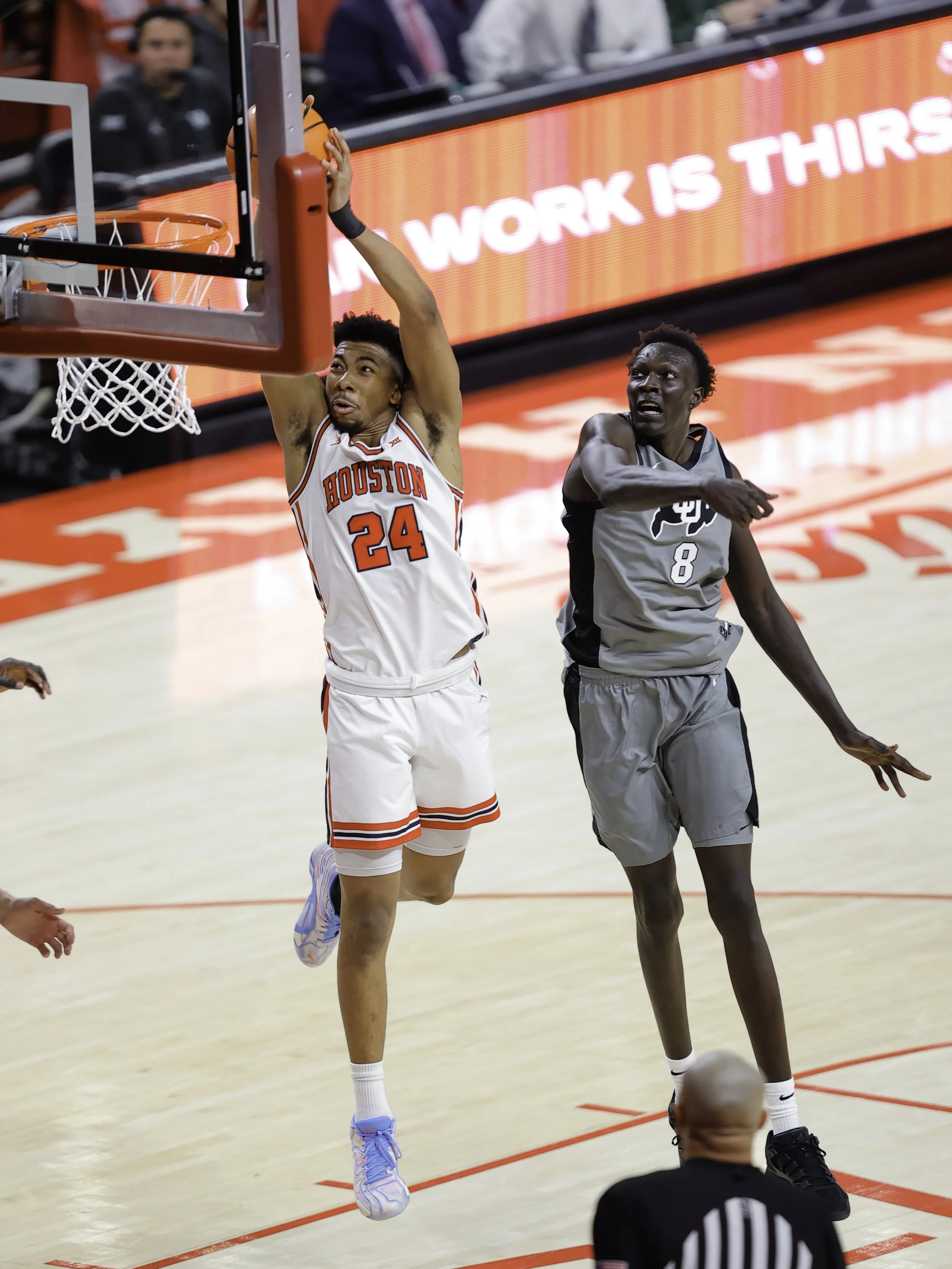
Daniel Jefferson / Independent Frames
The Houston Cougars dominated the Colorado Buffaloes 102–62 on Thursday, turning what many expected to be a competitive matchup into a lopsided affair. From the opening tip, Houston set the tone, using aggressive defense and quick transitions to establish an early advantage.
Colorado struggled to handle Houston’s pace. Every attempt to mount an offensive sequence was disrupted by the Cougars’ rotations and timely contesting of shots. Turnovers piled up in the first half, and Houston converted nearly all of them into points, building a lead that would only grow as the game progressed.
Offensively, Houston showed balance. Multiple players contributed to the scoring load, both in the paint and from outside the three-point line. Ball movement was crisp, and the Cougars consistently created open looks for shooters. Colorado’s defense, meanwhile, appeared disorganized, leaving gaps that Houston exploited efficiently.

Daniel Jefferson / Independent Frames
The first media timeout highlighted the disparity. Houston had already scored double digits more than Colorado, relying on fast breaks and solid perimeter shooting. The Buffaloes attempted to adjust, but their efforts were repeatedly thwarted by Houston’s disciplined defensive approach.
As the first half continued, Houston’s lead widened. The Cougars demonstrated patience on offense, moving the ball and setting up high-percentage shots. Colorado struggled to generate momentum, and every scoring run was met by a counter from Houston, preventing any real chance of a comeback.
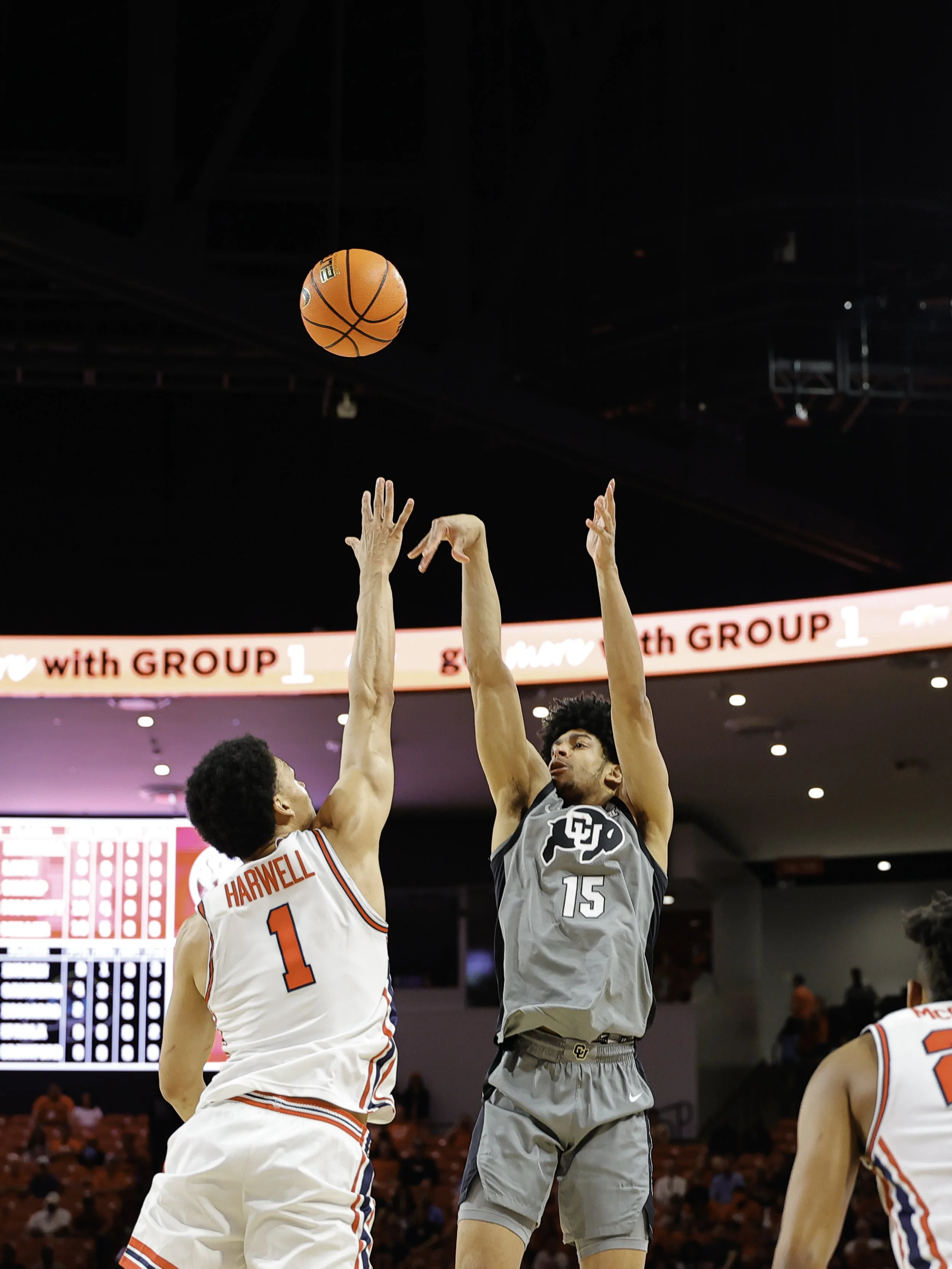
Daniel Jefferson / Independent Frames
Colorado did manage some individual scoring bursts, but they were isolated moments. Without team cohesion or an ability to slow the game down, the Buffaloes fell further behind. Houston’s bench players also contributed, keeping the energy high and the scoring consistent throughout the half.
By halftime, Houston’s lead was substantial. The Cougars’ shooting percentages remained high, while Colorado’s field goal attempts were frequently contested or off-balance. The scoreboard reflected not only offensive efficiency but also the effectiveness of Houston’s defensive schemes.
Coming out of halftime, Houston maintained its intensity. The Cougars continued to push the pace, forcing turnovers and exploiting mismatches. Colorado attempted to switch up lineups and defensive assignments, but Houston adjusted seamlessly, maintaining control over the game.
Balanced scoring remained a key for Houston. With several players hitting shots consistently, the Cougars were difficult to defend. The Buffaloes’ inability to rotate defensively or contest shots effectively contributed to the widening gap on the scoreboard.
Colorado tried to slow the tempo by holding the ball longer and running set plays, but Houston’s pressure negated most of those attempts. Fast breaks and transition points remained a major factor in Houston’s scoring strategy, and the Buffaloes were unable to keep up.
The third quarter saw Houston extend the lead even further. Key contributions came from both starters and reserves, allowing the Cougars to maintain energy while continuing to dominate possession. Colorado’s scoring remained sporadic, with few sequences lasting more than a couple of passes before Houston’s defense disrupted the rhythm. Turnovers were a consistent problem for Colorado throughout the game. Each lost possession often resulted in points for Houston, creating a snowball effect. The Cougars capitalized on these mistakes with both speed and precision, widening the lead to 40 points by the fourth quarter. Houston’s defensive intensity never wavered. The team rotated well, contested shots, and boxed out effectively on rebounds. Colorado’s players were often forced into low-percentage attempts, contributing to their low shooting percentage for the game.
The Cougars’ offensive execution was equally impressive. Ball movement and player spacing allowed Houston to find open shots regularly. They maintained a high shooting efficiency even late in the game, which prevented Colorado from narrowing the gap. As the fourth quarter began, the game was essentially decided. Houston continued to score at will while holding Colorado to limited possessions. The 102–62 final score underscored the Cougars’ ability to control both ends of the court for the entire contest.

Daniel Jefferson / Independent Frames
Colorado showed moments of resilience, hitting a few timely shots and making modest runs, but each was quickly countered by Houston. The disparity in depth and execution was clear, with Houston able to sustain energy and offensive output throughout the final period. The Cougars’ bench proved valuable, contributing both points and defensive stops. This allowed Houston’s starters to rest while maintaining momentum and energy on the court. Colorado had no equivalent depth to respond. Rebounding was another area where Houston dominated. Offensive rebounds turned into second-chance points, while defensive boards limited Colorado’s opportunities. The physicality and positioning of the Cougars contributed to the overall disparity in possessions and scoring chances.

Daniel Jefferson / Independent Frames
The margin of victory reflected the cumulative impact of Houston’s strategy. Effective defense, balanced scoring, and bench contributions all played a role in the lopsided outcome. Colorado struggled to execute in transition or maintain offensive cohesion under pressure. In the end, the 102–62 result highlighted Houston’s execution and control over the game from start to finish. The Cougars demonstrated both depth and discipline, while Colorado was unable to adjust effectively to the pace and pressure applied by Houston. Overall, the game was a statement by Houston in terms of efficiency and consistency. The Cougars left little room for doubt, showing they could dominate an opponent on both sides of the court when executing their game plan effectively.